
Chopping Broccoli
What will the Fed cook up next?


An uneventful week on Wall Street but we did get ISM services/manufacturing surveys and consumer credit data that demands attention as we turn towards 2026. The ISM (Institute for Supply Management) reports are monthly surveys of business conditions that serve as leading economic indicators and are closely monitored by investors.
There are two main reports: The ISM Manufacturing Report surveys 400 purchasing managers at manufacturing companies (11% of GDP) while the ISM Services Report surveys purchasing managers at services companies (70% of GDP).
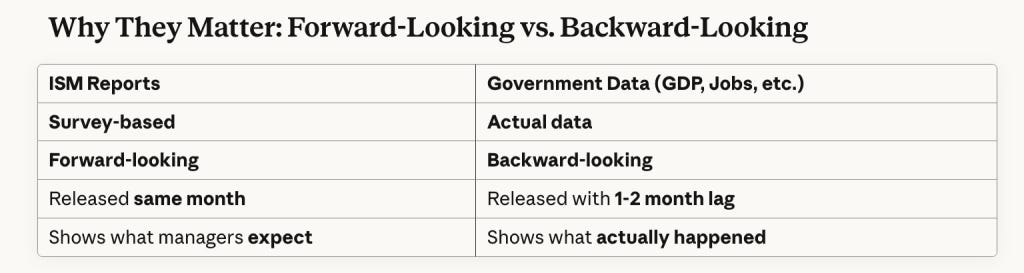
The graphic below shows how the ISM data is viewed by investors compared to government data:
So, what did these reports show this week? Manufacturing contracted for the ninth consecutive month with new orders falling and employment signaling job cuts. Meanwhile, ISM Services remained barely above expansion with new orders decelerating substantially over the last month. The critical concern is that employment is now contracting in both sectors which historically leads to weaker consumer spending.
Adding to the complexity, prices in both surveys remain elevated which puts the Fed in a tough spot. Every survey respondent cited the same culprit: tariff uncertainty is freezing business investment, disrupting supply chains, and forcing headcount reductions across industries.
This week’s data reveals a negative chain reaction may be forming as seen in the graphic below:
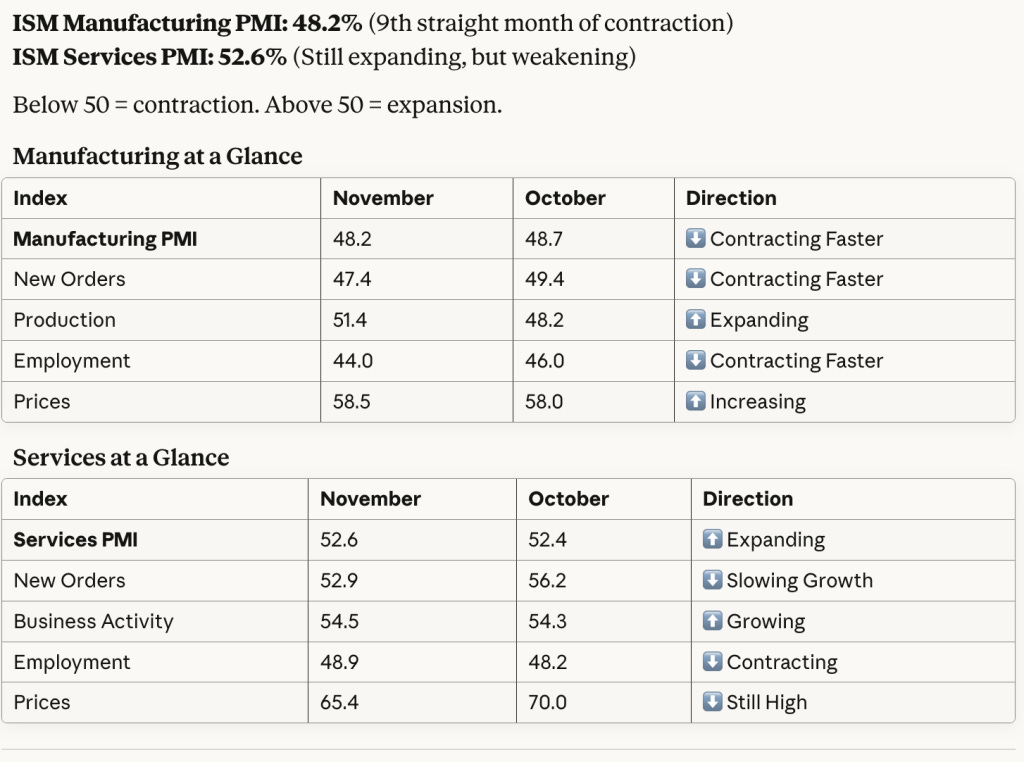
As long as services stay above 50, the overall economy remains in expansion—manufacturing’s 11% of GDP simply can’t overwhelm services’ 70% share. However, the trend is concerning as new orders are decelerating. If services follow manufacturing below 50 in the coming months, recession probability would jump significantly.
The next few months of employment and new orders data will be critical in determining whether this is a temporary soft patch or the beginning of a broader downturn. Also, the government data won’t recover from the government shutdown until January so we will have to wait for more hard data.
Total Consumer Credit Growth: 2.2% annualized (October 2025)
The Federal Reserve’s latest consumer credit report was also released this week and it adds another concerning piece to this week’s economic puzzle. The report said total consumer credit grew at 2.2%, here is the breakdown into revolving and non-revolving:

This is a concerning pattern if it continues. When credit card balances grow faster than installment loans, it typically signals cash flow stress, inability to qualify for larger loans and reduced confidence in making major purchases.
The S&P 500
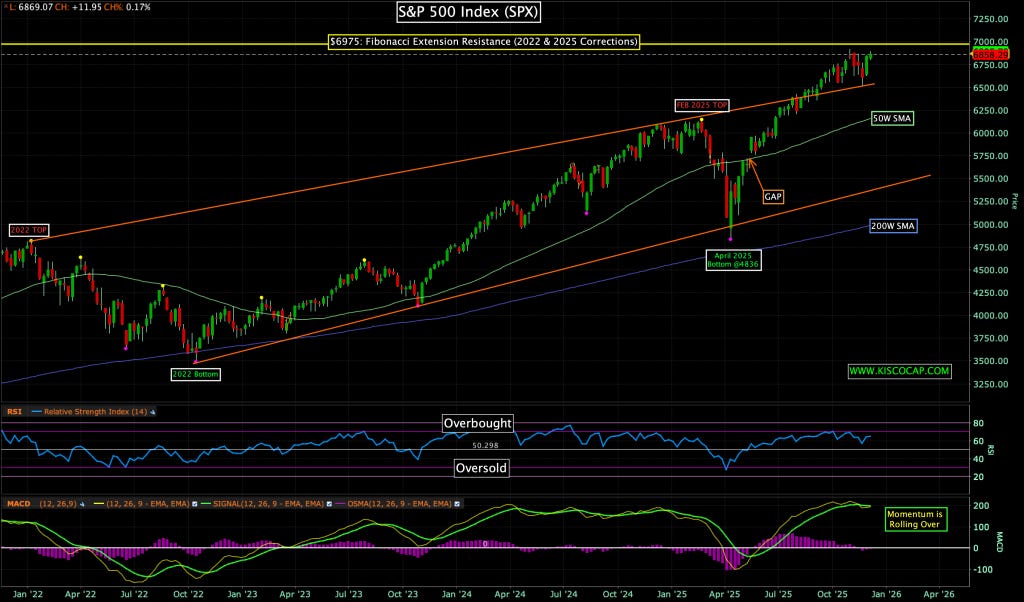
Despite some concern over the consumer, large cap technology companies are expected to keep pumping out profits. However, there is concern that the artificial intelligence trade is fully priced which has caused many stocks to stagnate. As you can see in the chart below of the S&P 500 Index, we have traded sideways since September while momentum has flattened.
The US Treasury Yield Curve
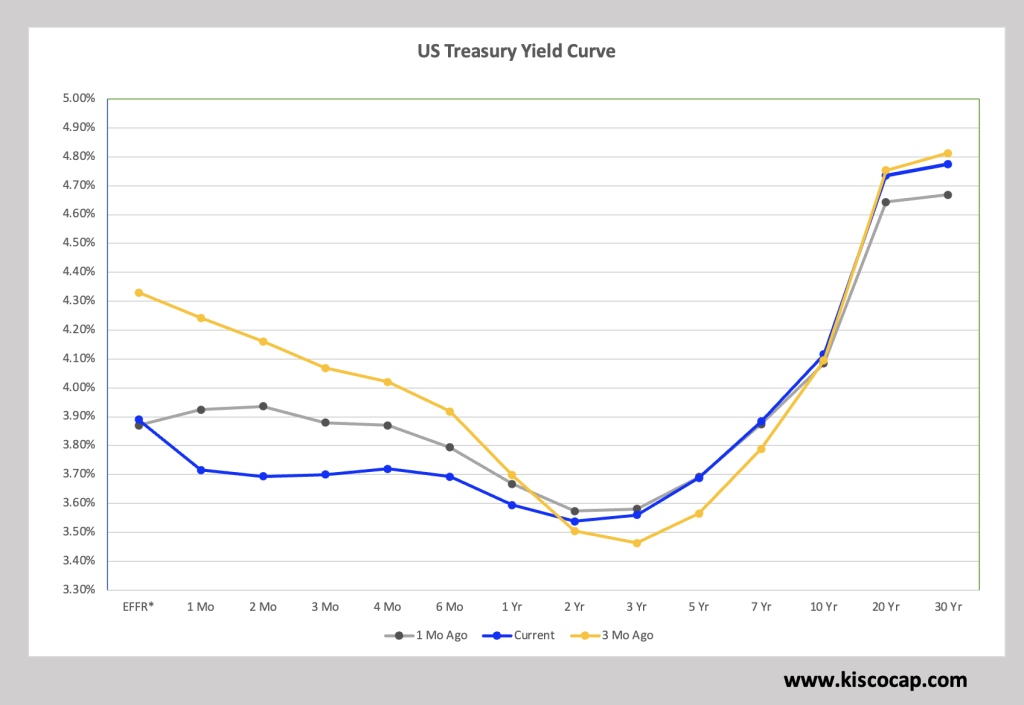
The yield curve is steepening as the left side prepares for a 25bp rate cut next week while the right side signals sticky inflation will persist. I am watching the belly of the curve with the most interest (2-5Yr) as persistent inflation could push these yields above 4%.
How will all of this play into the Fed meeting on Wednesday? I am not sure a divided Fed will provide an answer next week and I am still waiting for someone to raise their hand ask why the balance sheet is so massive. We also need to factor into the equation that next year there will be large tax refunds for consumers and lots of capital spending by companies due to changes in tax policy. Which are nice to have but also inflationary. Not to mention Powell will be out as Chairman come May so the markets may want a divided Fed to wait and see in this environment.
Thank you for being a subscriber!
President, Kisco Capital