
Trapped!!!
You have sunk my battleship....

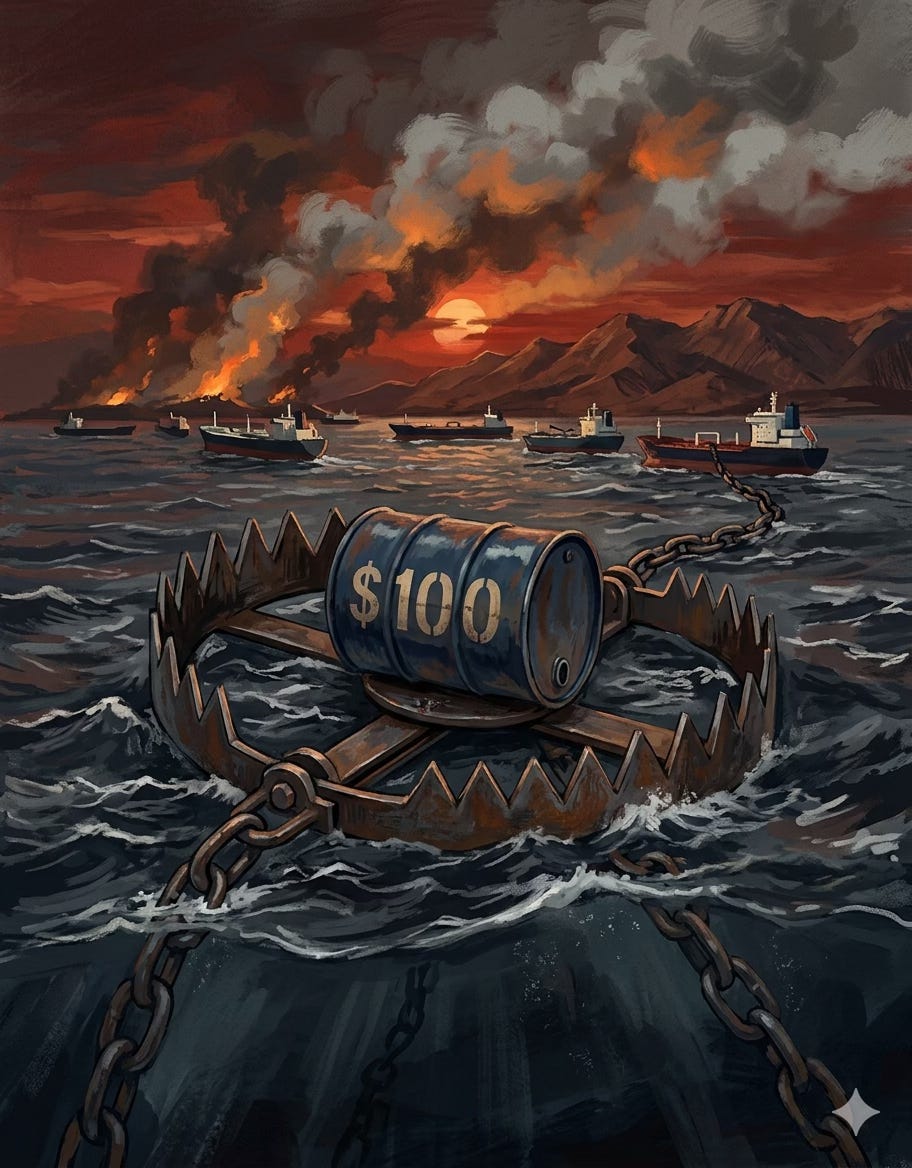
What is striking about this week is how interconnected everything is. Inflation, oil, the Fed, the stock market — these aren’t four separate stories. They’re one story, and energy is the thread that ties them together. The price of oil is driving inflation higher, inflation is tying the Fed’s hands, the Fed’s paralysis is unnerving investors, and investors are stuck watching a geopolitical crisis they can’t price because nobody knows when it ends. The uncomfortable conclusion is a simple one: the only way out of this trap is through it.
The Inflation Trap
The government revised Q4 2025 GDP down to just 0.7% annualized growth — that’s roughly half of what economists were expecting and a sharp step down from the previous estimate of 1.4%. At the same time, the inflation numbers refuse to cooperate. Core PCE, the Fed’s preferred inflation gauge, came in at +0.4% month-over-month, keeping the year-over-year rate parked at 3.1%. Headline PCE was +0.3%. Neither number gives the Fed any room to breathe.
The CPI picture isn’t any friendlier. With oil surging past $100 a barrel, the energy component of CPI is about to get a lot worse. Economists have modeled what sustained oil prices do to the consumer price index: at $100 average for 2026, CPI inflation could jump an additional 1.2 percentage points to roughly 4.0%. At $120, we’re looking at nearly 5%. Those aren’t abstract numbers — they show up in grocery bills, gas station receipts, and mortgage payments.
Here’s the trap: growth is slowing and inflation is accelerating. That’s the textbook definition of stagflation, and it puts the Federal Reserve in an impossible position. Cut rates to support a weakening economy, and you risk pouring gasoline on an inflation fire. Hold rates steady (or raise them) to fight prices, and you risk tipping a fragile economy into recession.
Oil Trapped in the Gulf
Roughly 20% of the world’s daily oil supply flows through the Strait of Hormuz — a narrow passage between Iran and Oman that connects the Persian Gulf to the open ocean. Iran’s new supreme leader, Mojtaba Khamenei, appointed on March 9 after the death of his father, has declared that the strait should remain closed as “a tool to pressure the enemy.” The IEA isn’t mincing words either — they called this the largest supply disruption in the history of the global oil market.
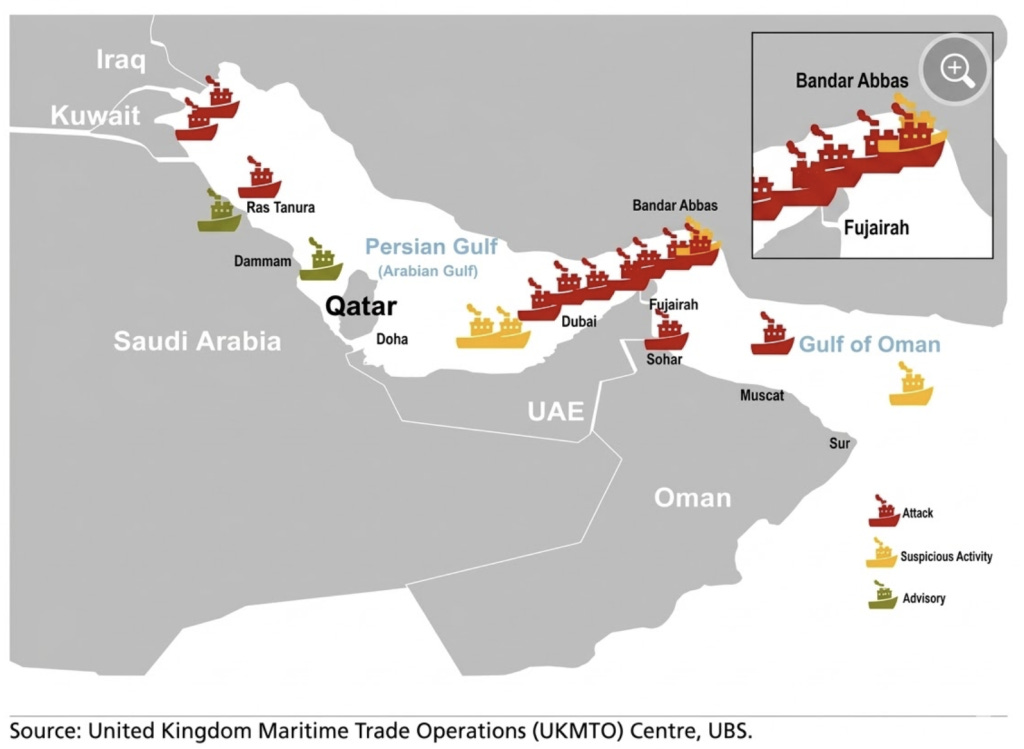
The big question is how long will this disruption last and what conditions are required to re-open the gulf. This is something that is elusive as the politics are getting complicated. For now, many countries are releasing oil from their reserves but hoarding and supply disruptions are a concern for areas like Asia which rely on the Middle East to supply their countries.
The Policy Trap
The White House is throwing everything at the wall. President Trump authorized the release of 172 million barrels from the Strategic Petroleum Reserve. The IEA coordinated a record 400 million barrel release from reserves worldwide. Trump waived oil-related sanctions on Russia to get more supply flowing. He ordered the U.S. Navy to escort tankers through the Strait of Hormuz. The uncomfortable truth is becoming clear: there isn’t much any government can do to provide meaningful relief short of ending the conflict itself.
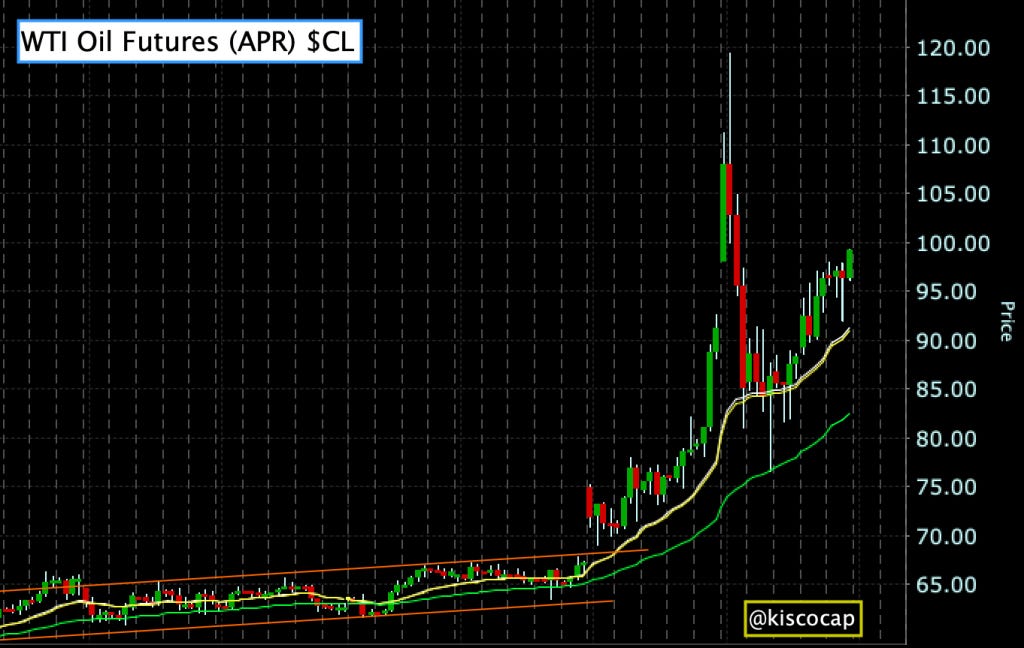
That’s the policy trap. Trump campaigned on cheap energy and economic strength, but he’s also committed to preventing Iran from going nuclear — a goal he described as being “of far greater interest and importance to me” than the cost of oil. Those two objectives are now in direct tension.
The Fed Trap
Meanwhile, the Fed is stuck in its own trap: Powell’s term expires May 15, nominee Kevin Warsh is tangled in a Senate confirmation fight (Senator Tillis is blocking all Fed nominees over a separate political dispute), and Goldman Sachs just pushed their next expected rate cut from June to September. The people who are supposed to be steering the ship are either constrained, distracted, or on their way out the door.
Stocks Are Trapped in a Range (For Now)
Put it all together and you get a stock market that can’t figure out which way to go. The S&P 500 briefly poked above 7,000 earlier this year, then retreated. It’s been grinding lower in what analysts are calling a slow-motion decline rather than a single dramatic selloff. However, we are still above the low struck at 6500 last November so we have been treading water for some time now.
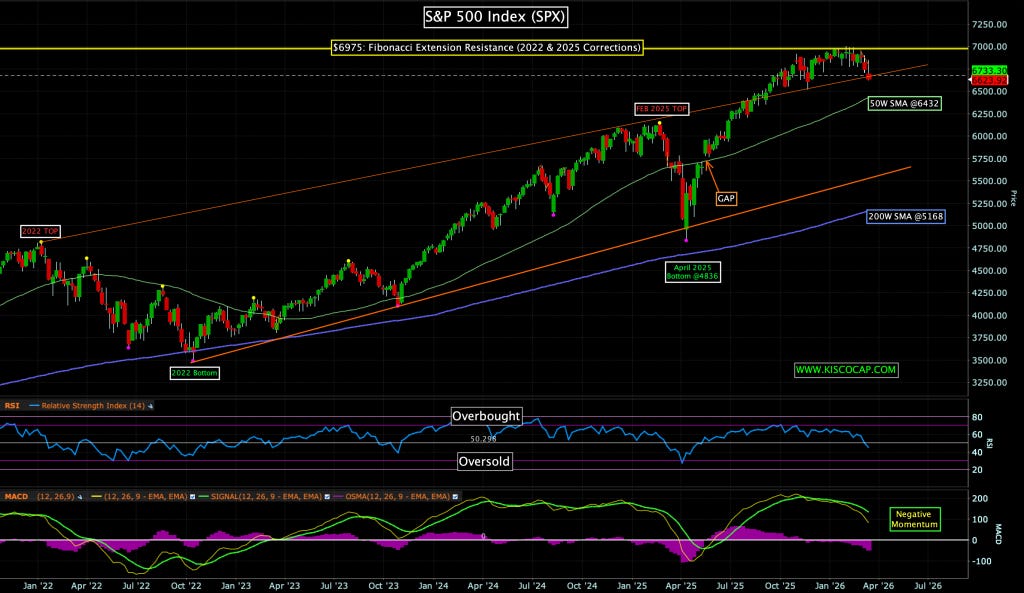
You can see the momentum indicators at the bottom of the chart are pointed lower so expect there to be continued pressure into next week. The 6500 should be a support line if re-tested and if a deeper correction is on tap then 6000 is likely the next stop (~ 10% lower).
The market wants a reason to rally, but between an oil crisis with no clear end date, inflation data that won’t cooperate, a Fed in transition, and GDP growth that’s barely above zero, the catalysts are hard to find. Until something breaks the logjam — a ceasefire, a decisive policy move, or a meaningful shift in the data — stocks look stuck.
Thank you for being a subscriber!
President, Kisco Capital